
- Natural Stone
- Artificial Stone



The 4 Most Common Myths About Granite and Quartz
Granite and quartz are two of the most popular materials for countertops, each offering unique benefits that make them ideal for kitchens, bathrooms, and other surfaces. However, choosing between these two materials can be challenging, especially when there are so many misconceptions surrounding their properties, maintenance, and costs. To help you make an informed decision, we’ve debunked the four most common myths about granite and quartz. By understanding the facts, you can confidently select the best material for your construction or renovation project.
Granite: Myths and Realities
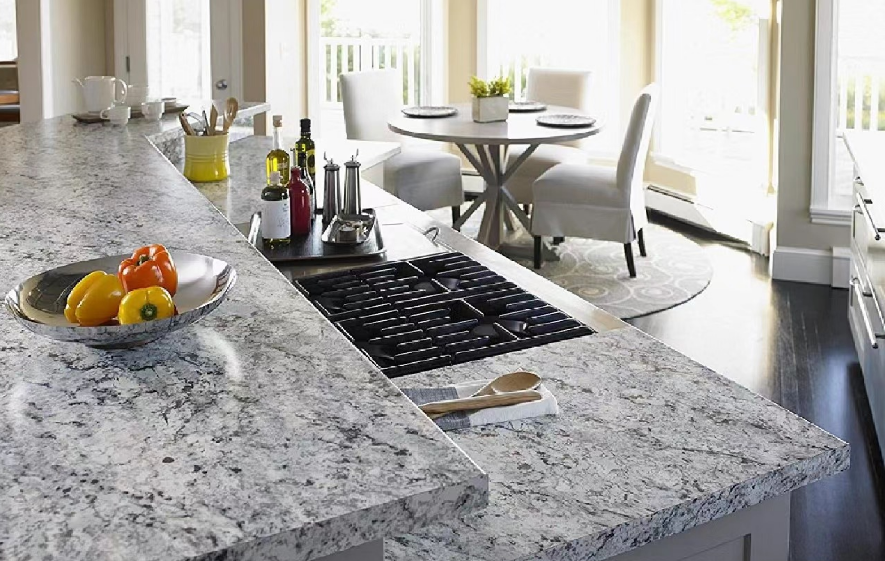
Granite is a timeless and elegant natural stone that has been a favorite for countertops for decades. Its unique patterns, durability, and natural beauty make it a top choice for homeowners. However, several myths about granite can lead to confusion. Let’s set the record straight.
Myth 1: Granite is Expensive
One of the most persistent myths about granite is that it’s prohibitively expensive. While it’s true that granite is a premium material, its cost is often misunderstood.
- Reality: Granite is available at a wide range of price points, making it accessible for many budgets. The abundance of granite has driven prices down over the years, and it is now competitively priced compared to other natural stones.
- Value Addition: Granite countertops can significantly increase the resale value of your home, making them a worthwhile investment. While cheaper alternatives like laminate or tile may save money upfront, they lack the durability and aesthetic appeal of granite.
- Bottom Line: Granite is not as expensive as many believe, and its long-term benefits far outweigh the initial cost.
Myth 2: Granite is Hard to Maintain
Another common misconception is that granite requires extensive maintenance to keep it looking its best.
- Reality: Granite countertops do need to be sealed, but the process is simple and infrequent. To maintain your granite, clean it regularly with a granite-specific cleaner or mild soap and water. Once dry, apply a granite sealer, which takes less than 15 minutes. Resealing is only necessary every 12 to 18 months.
- Ease of Care: With proper sealing, granite is resistant to stains and easy to clean, making it a low-maintenance option for busy households.
Myth 3: Granite is Indestructible
While granite is one of the hardest and most durable countertop materials available, it’s not completely indestructible.
- Reality: Granite is highly resistant to heat, scratches, and stains, but it can still be damaged under extreme conditions. For example, placing a hot pot directly on the surface may cause the sealer to dull or become cloudy. Abrasive chemicals can scratch the surface, and heavy impacts can cause chips or cracks.
- Stain Resistance: Although granite is stain-resistant, oily substances or harsh chemicals can leave marks if not cleaned promptly. However, most stains can be removed with proper care.
- Durability: With regular maintenance, granite countertops can retain their beauty and functionality for decades.
Myth 4: Granite Will Lose Its Shine
Some people worry that granite will lose its luster over time, becoming dull and unattractive.
- Reality: This myth likely stems from confusion with marble, which can etch and dull over time. Granite, on the other hand, maintains its shine with regular use. If you do notice any dulling, a simple application of granite polish can restore its sparkle.
- Longevity: Granite’s natural hardness ensures that it remains vibrant and glossy for years, even in high-traffic areas.
Quartz: Myths and Realities
Quartz is an engineered stone that has gained immense popularity due to its durability, versatility, and aesthetic appeal. However, like granite, quartz is surrounded by myths that can mislead potential buyers. Let’s debunk the most common misconceptions about quartz.
Myth 1: Quartz and Quartzite Are the Same Thing
The similarity in their names often leads to confusion between quartz and quartzite, but they are entirely different materials.
- Reality: Quartzite is a natural metamorphic rock formed from sandstone under extreme heat and pressure. It is a type of granite and is known for its hardness and natural beauty.
- Quartz: Quartz, on the other hand, is an engineered material made from crushed natural quartz, resin, and pigments. It is non-porous, highly durable, and available in a wide range of colors and patterns.
- Key Difference: While both materials are durable, quartz offers more consistency in color and pattern, whereas quartzite has natural variations.
Myth 2: Quartz Lacks Variety
Some people believe that quartz, being an engineered material, lacks the variety and uniqueness of natural stone.
- Reality: Quartz is available in an almost limitless range of colors, patterns, and finishes. Manufacturers can replicate the look of natural stone, such as marble or granite, or create entirely unique designs.
- Customization: Whether you prefer a classic white countertop or a bold, colorful design, quartz offers endless possibilities to match your style.
Myth 3: Quartz Can Never Stain, Burn, Crack, or Chip
Quartz is often marketed as indestructible, but this is an exaggeration.
- Reality: While quartz is highly resistant to stains, heat, and scratches, it is not completely immune to damage. Extreme heat, such as placing a hot pan directly on the surface, can cause discoloration or cracking. Harsh chemicals can also damage the resin binder.
- Durability: Despite these limitations, quartz is one of the most durable countertop materials available, making it an excellent choice for busy kitchens.
Myth 4: Quartz Only Comes with a Polished Finish
Many people assume that quartz countertops are only available with a glossy, polished finish.
- Reality: Advances in manufacturing technology have expanded the range of finishes available for quartz. In addition to the classic polished finish, you can now choose from matte, textured, or honed finishes to suit your design preferences.
- Versatility: These options allow quartz to mimic the look of natural stone or create a unique, modern aesthetic.
Conclusion
Granite and quartz are two of the most sought-after materials for countertops, each offering a unique combination of beauty, durability, and practicality. By debunking the common myths surrounding these materials, we hope to provide clarity and help you make an informed decision for your next project.
- Granite: A timeless natural stone that offers elegance, durability, and a wide range of price points. With proper care, it can last for decades and add significant value to your home.
- Quartz: An engineered material that combines the beauty of natural stone with enhanced durability and customization options. Its non-porous surface and low maintenance make it a popular choice for modern homes.
Whether you choose granite or quartz, both materials are excellent options for creating stunning and functional spaces. Understanding their unique properties and dispelling the myths will ensure you select the best countertop material for your needs.
Ready to explore your options? Visit Stone Warehouse to discover our extensive collection of granite and quartz countertops and find the perfect fit for your home.
Latest News
-
 Vanity Tops are Bathroom Worktops (WC’s, Toilets, Bathrooms, Ensuites)
Vanity Tops: The Perfect Bathroom Worktops for WC’s, Toilets, and Ensui...
-
 Kitchen Splashbacks and Upstands For Wall Protection
Kitchen Splashbacks and Upstands: Wall Protection Kitchen splashbacks and ups...
-
 The Five Quartzite Designs
The Five Quartzite Designs Quartzite is a stunning natural stone that combine...
-
 Stunning Works: Marble Slab Wall
Stunning Works: Marble Slab Walls Marble slab walls are the epitome of luxury...
-
 Red Marble: Color And Design Combined
Red Marble: Color And Design Combined Red marble is more than just a materia...
-
 Travertine Countertops
Travertine Countertops Travertine is a natural stone known for its earthy ton...
-
 Marble Kitchen Island: Best Ideas & Inspirations
Marble Kitchen Island: Best Ideas & Inspirations A marble kitchen island ...
-
 The Pros and Cons of Natural Stone Floor Tiles
The Pros and Cons of Natural Stone Floor Tiles Natural stone floor tiles have...
-
 5 Key Factors How to Tell If Good Quality Marble
5 Key Factors How to Tell If Good Quality Marble Marble has long been a sym...
-
 5 Most Beautiful Green Stone Countertops For 2025
Introduction: Why You Should Go Green Stone with Countertops? In 2025, green ...